What Happened in Aleppo?
For many people around the world, the Aleppo war became one of the defining symbols of the Syrian conflict. Images of destroyed neighborhoods, overwhelmed hospitals, and families forced from their homes brought global attention to a city that had once been a thriving cultural and economic center.
But what happened in Aleppo, Syria, and what challenges do people there continue to face today?
In this page you will find:
In This Page
You Will Find:
1. Where Is Aleppo and Why Is It Important?
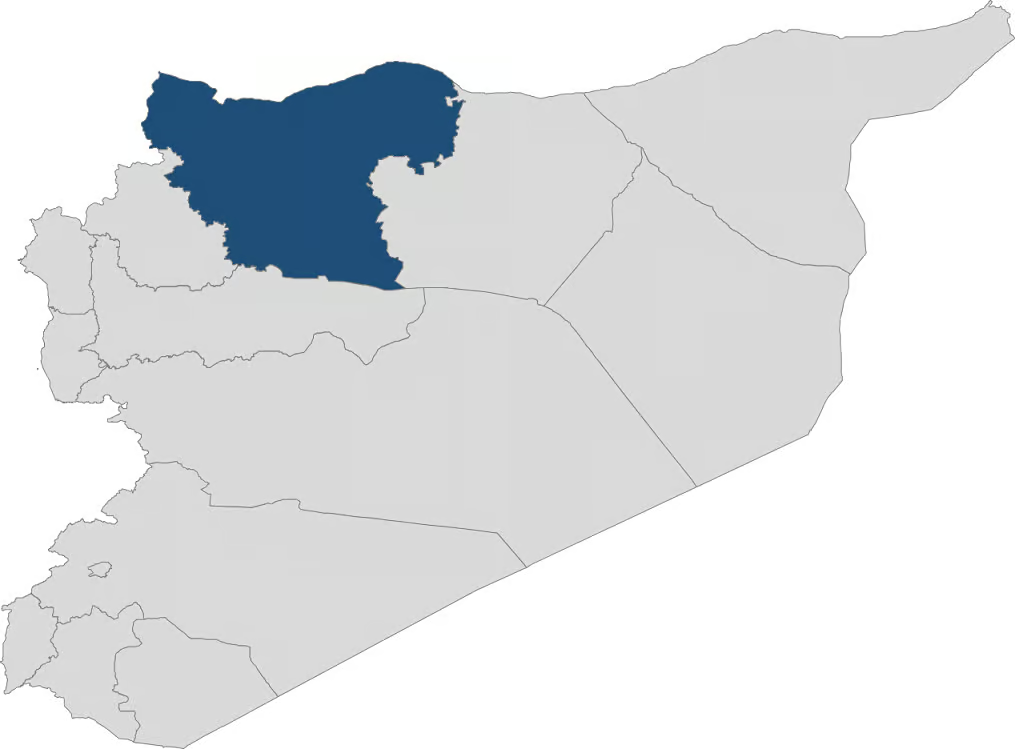
Aleppo is Syria's largest city and one of the oldest continuously inhabited cities in the world. For centuries, it served as a major center for trade, culture, education, and industry.
Before the conflict began, Aleppo was home to 2.3 million people and played a vital role in Syria's economy. Its historic markets, ancient architecture, and diverse communities made it one of the country's most important cities.
By the end of 2016
civilians found themselves trapped between front lines

2 Million had fled Aleppo

Only 29 Doctors cared for the residents

Only five hospitals remained
2. What Happened in Aleppo, Syria?
When conflict spread from Deraa, across Syria in 2012, Aleppo quickly became one of the war's most important battlegrounds.
As Syria's economic hub, control of Aleppo carried both strategic and symbolic significance. Whoever controlled the city would hold influence over major trade routes, population centers, and one of the country's most important urban areas.
For four years, the city was divided between government-controlled western districts and opposition-held eastern neighborhoods.
What followed was years of intense fighting that reshaped daily life for civilians across Aleppo. Homes, hospitals, and schools were damaged or destroyed, and access to basic services became increasingly limited.
We were on the ground then
We are on the ground now
3. The Aleppo War and Humanitarian Crisis
As fighting intensified, civilians found themselves trapped between front lines. Airstrikes, shelling, chlorine gas attacks, and street-to-street combat caused widespread destruction, while shortages of food, clean water, electricity, and medical supplies became increasingly common.
By the end of 2016, an estimated 2 million people had fled the city of Aleppo to escape bombardment and siege, while entire neighborhoods lay in ruins.
For many around the world, images from Aleppo came to define the Syrian conflict itself: damaged hospitals, rescue workers searching through rubble, and families struggling to survive amid one of the century's most devastating humanitarian crises.
4. How Did the Aleppo Syria War Affect Healthcare?
One of the most devastating consequences of the Aleppo Syria war was the impact on healthcare.
By late 2016, only five hospitals remained operational in eastern Aleppo, serving an estimated population of 300,000 civilians, including 85,000 children.
At one point, just 29 doctors were left to care for the city's remaining residents, while critical shortages of ICU beds, ventilators, medicines, and medical supplies put countless lives at risk.
By the time the fighting eased, Aleppo’s healthcare system had been left deeply weakened, with impacts that continue to be felt today.

5. What Is Happening in Aleppo, Syria Today?
Although large-scale fighting in Aleppo has largely ended, the city continues to recover from more than a decade of conflict.
Large parts of eastern Aleppo were heavily damaged, and reconstruction has been slow and uneven. The United Nations and humanitarian agencies have reported that many neighbourhoods still face challenges with damaged housing, disrupted infrastructure, and limited access to reliable services such as electricity and clean water.
Healthcare remains under extreme pressure. The World Health Organization has estimated that only around half of Syria’s health facilities are fully functional, and shortages of trained medical staff continue to affect access to care in Aleppo.
6. How Is SAMS Helping People in Aleppo?
SAMS has supported communities in Syria throughout the conflict and continues to provide critical healthcare services today.
In Aleppo, SAMS specifically works to strengthen access to medical care and support vulnerable populations facing ongoing humanitarian challenges. This includes helping healthcare providers deliver essential services and supporting communities as they continue to recover.
In Syria, we’re proud to:
- Operate 60+ Medical facilities
- Provide thousands of medical services daily
- Care for displaced and vulnerable communities
- Offer specialized medical and mental health services
7. Why Continued Support Matters
While Aleppo is no longer in the international spotlight as frequently as it once was, the needs of its people have not disappeared. Aleppo’s revival is key to Syria’s long-term prosperity and stability.
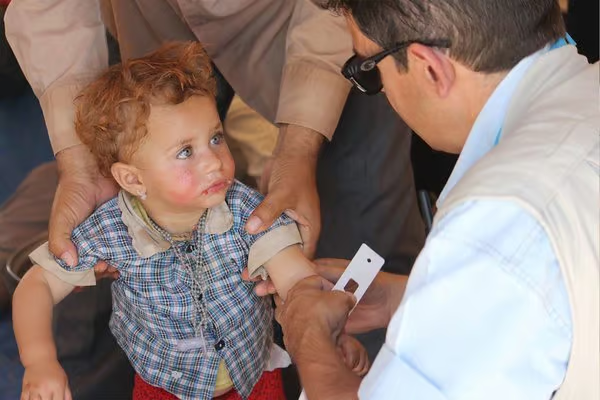
Many families continue to navigate the long-term consequences of conflict while working to rebuild their lives and communities. Access to healthcare remains an essential part of that recovery.
By supporting SAMS, you can help to rebuild Syria’s healthcare system, by combining lifesaving care with long-term investments in hospitals, medical staff, and health infrastructure.
Our work is about more than emergency response. It’s about protecting the future of a country that once thrived, and helping rebuild what Syria was before the war. Together we can help restore not just healthcare systems, but hope for families across Aleppo and beyond.