May 14, 2026
In this page:
4. Significance of Eid al-Adha in Islam
5. How Is Eid al-Adha Celebrated?
6. Difference Between Eid al-Adha vs. Eid al-Fitr
7. Eid al-Adha Around the World
9. How SAMS Celebrates the Spirit of Eid al-Adha
10. FAQs About Eid al-Adha 2026
11. Let Your Sacrifice ean Something
Eid al-Adha 2026: Date, Meaning & the Spirit of Sacrifice That Unites the World
Honor the Spirit of Sacrifice Through Giving
This Eid, help provide life-saving medical care to families affected by war and displacement.
1. Eid al-Adha 2026
Once a year, more than 1.8 billion Muslims around the world pause to remember a moment of absolute surrender. A father. A son. A knife raised — and then, by God’s mercy, lowered. In its place: a ram. In its wake: one of the holiest celebrations in the Islamic calendar.
This is Eid al-Adha — the Feast of Sacrifice. It is a day of prayer, of feasting, of gratitude, and above all, of giving. And in 2026, it falls during some of the most spiritually charged days of the Islamic year.
Whether you are preparing to celebrate, learning about Islamic traditions for the first time, or looking for a meaningful way to give this season, this guide covers everything you need to know: what is Eid al-Adha, when is Eid al-Adha 2026, and how your generosity this holiday can change lives.
2. When Is Eid al-Adha 2026?
Eid al-Adha 2026 is expected to begin on the evening of Tuesday, May 26, 2026, and continue through Friday, May 29, 2026. The celebration spans three to four days, beginning on the 10th of Dhul Hijjah — the final month of the Islamic lunar calendar.
Because the Islamic calendar follows the lunar cycle — approximately 11 days shorter than the Gregorian calendar — Eid al-Adha falls on a different date each year, rotating backward through the seasons over a 33-year cycle. In 2026, it falls in late May in the Northern Hemisphere, offering warmer, longer days for outdoor gatherings and celebrations.
| Event | Gregorian Date (2026) | Islamic Date |
| Day of Arafat (Hajj) | Monday, May 25, 2026 | 9 Dhul Hijjah |
| Eid al-Adha — Day 1 | Tuesday, May 26, 2026 | 10 Dhul Hijjah |
| Eid al-Adha — Day 2 | Wednesday, May 27, 2026 | 11 Dhul Hijjah |
| Eid al-Adha — Day 3 | Thursday, May 28, 2026 | 12 Dhul Hijjah |
| End of Eid al-Adha | Friday, May 29, 2026 | 13 Dhul Hijjah |
Note: Dates are subject to official moon sighting confirmation. Local Islamic authorities in your country may announce slightly different dates.
3. What Is Eid al-Adha? The Feast of Sacrifice Explained
Eid al-Adha (عيد الأضحى) translates from Arabic as the “Festival of Sacrifice” or the “Feast of Sacrifice.” It is one of two major Islamic holidays — the other being Eid al-Fitr, which marks the end of Ramadan — and is widely considered the holier of the two.
Eid al-Adha commemorates one of the most profound moments in the Abrahamic tradition: the willingness of the Prophet Ibrahim (Abraham, peace be upon him) to sacrifice his son Ismail (Ishmael) in obedience to God. As Ibrahim raised the knife, God intervened — replacing Ismail with a ram. This act of divine mercy and Ibrahim’s unshakeable faith is at the heart of everything Eid al-Adha represents.
The holiday also marks the culmination of Hajj — the annual pilgrimage to Mecca — when millions of pilgrims gather on the plain of Arafat the day before Eid and then perform the ritual sacrifice. For Muslims around the world who are not on Hajj, Eid al-Adha is observed through prayer, the Qurbani sacrifice, family gatherings, and acts of charity.
4. The Spiritual Significance of Eid al-Adha in Islam
Eid al-Adha is not simply a holiday — it is a theological statement. Every element of its observance carries meaning.
4.1 Submission and Trust in God
The story of Ibrahim is a story of total trust. When God commanded something that defied human reason — the sacrifice of a beloved child — Ibrahim did not turn away. This submission (Islam itself means “submission” or “peace through surrender”) is the model Muslims aspire to in their own lives: trusting that God’s plan is greater than our own understanding.
4.2 Gratitude for Divine Mercy
God’s replacement of the sacrifice with a ram is an act of profound mercy. Eid al-Adha is therefore also a celebration of gratitude — for God’s mercy, for life, for abundance. This gratitude is not passive; it is expressed through generosity toward those who have less.
4.3 Justice and Sharing
The Qurbani (ritual sacrifice) is not merely symbolic. Islamic tradition prescribes that the meat must be divided into three equal parts: one for the family, one for friends and neighbors, and one for those in need. This built-in redistribution of resources is a deliberate act of social justice — ensuring that even the poorest families eat well during Eid.
5. How Is Eid al-Adha Celebrated? Key Traditions and Practices
While customs vary across the Muslim world — from Indonesia to Morocco to the United States — several traditions are universal:
- · Eid Prayer (Salat al-Eid): Muslims gather for a special congregational prayer, typically held outdoors or in large mosques, on the morning of Eid al-Adha. The prayer is followed by a sermon (khutbah).
- · Qurbani (Sacrifice): An animal — traditionally a sheep, goat, cow, or camel — is sacrificed in the name of God. The act commemorates Ibrahim’s sacrifice and must follow strict Islamic guidelines of humane treatment.
- · Distribution of Meat: The sacrificed animal’s meat is shared in three equal parts — family, neighbors, and the poor. For many families in conflict zones, this is the only time they eat meat all year.
- · New Clothes and Greetings: It is customary to wear new or best clothes and exchange greetings of “Eid Mubarak” (Blessed Eid) or “Eid Sa’id” (Happy Eid).
- · Visiting Family and Friends: Eid is a time for community — visiting relatives, sharing food, and strengthening bonds.
- · Giving to Charity (Sadaqah): Beyond the mandatory Qurbani, many Muslims use Eid al-Adha as an occasion for voluntary charitable giving — a reflection of the holiday’s core spirit of generosity.
6. Eid al-Adha vs. Eid al-Fitr: What’s the Difference?
Many people unfamiliar with Islam wonder about the two Eids. Here is a quick comparison:
| Eid al-Adha | Eid al-Fitr | |
|---|---|---|
| Also known as | Feast of Sacrifice / Greater Eid | Festival of Breaking Fast / Lesser Eid |
| When | 10–13 Dhul Hijjah | 1 Shawwal (after Ramadan) |
| Commemorates | Ibrahim’s sacrifice | End of Ramadan fasting |
| Key practice | Qurbani (animal sacrifice) | Zakat al-Fitr (charity before prayer) |
| Considered | The holier of the two Eids | The more joyous celebration |
Let your Eid giving reach families in need.
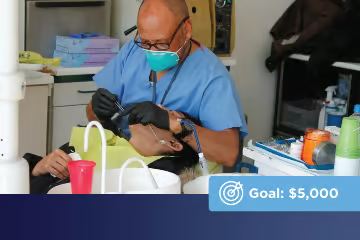
For millions of Syrians living through war, displacement, and poverty, Eid al-Adha arrives without a meal on the table. SAMS doctors and nurses are on the ground, delivering medical care to those who have nothing. Your donation this Eid is an act of Qurbani in spirit — a sacrifice offered for the sake of others.
Give Your Eid Donation to SAMS Today
7. Eid al-Adha Around the World: A Celebration of Unity
Eid al-Adha is a truly global celebration. Across continents and cultures, the same prayer is recited, the same sacrifice is performed, the same greeting is exchanged. Yet each community brings its own flavor:
How Muslims Celebrate Eid Around the World
- · In Turkey, families gather for elaborate multi-course meals and children receive gifts and money (bayram harçlığı).
- · In Egypt, streets are alive with the smell of grilled meat and the sound of takbir — the proclamation of God’s greatness.
- · In Pakistan and Bangladesh, the Qurbani season is marked by enormous cattle markets and community-wide sharing of meat.
- · In Indonesia, the world’s most populous Muslim country, neighborhoods organize collective sacrifices and distribute meat to thousands.
- · In the United States, the UK, and Europe, Muslim communities hold communal prayers in convention centers, parks, and mosques — and many choose to donate to charities serving those in war-torn regions as their act of Qurbani.
What unites all of them: the conviction that abundance is not meant to be hoarded. It is meant to be shared. Especially with those who have nothing.
8. Eid al-Adha and the Power of Giving: Why This Season Matters
The Prophet Muhammad (peace be upon him) said: “The best of days in this world are the ten days of Dhul Hijjah.” Scholars of Islam teach that good deeds performed during these days — including charity — carry a multiplied reward. This is why Eid al-Adha season is one of the most generous times in the Islamic giving calendar.
For organizations like SAMS, this season is also critical. Donations surge during Dhul Hijjah and Eid al-Adha, and that support directly translates into lives saved in Syria, Yemen, and other conflict zones.
But the need does not pause after Eid. The families SAMS serves live every day in the shadow of war. Their hospitals are bombed. Their doctors are few. Their children are born into conflict. Your Eid donation is not just a seasonal gesture — it is a lifeline that stretches far beyond the holiday.
9. How SAMS Honors the Spirit of Eid al-Adha Year-Round
SAMS — the Syrian American Medical Society — was founded by Syrian-American physicians who watched their homeland endure crisis and refused to look away. Today, SAMS operates across Syria and other conflict-affected regions, delivering:
- · Emergency surgical care for war-wounded patients
- · Maternal and newborn healthcare in areas without functional hospitals
- · Mental health services for survivors of trauma and torture
- · Primary care and chronic disease management for displaced populations
- · Medical training to build local healthcare capacity that lasts beyond emergency aid
When you give to SAMS this Eid al-Adha, you are not giving to an abstract cause. You are giving to a mother whose hospital was bombed. A child whose doctor was killed. A survivor whose wounds — physical and psychological — need tending. You are fulfilling the very spirit of Ibrahim’s sacrifice: putting your trust in something greater than yourself, and giving what you have for the sake of another.
10. Frequently Asked Questions About Eid al-Adha 2026
10.1 Is Eid al-Adha a public holiday?
In Muslim-majority countries, Eid al-Adha is a national public holiday and schools, businesses, and government offices close for several days. In countries with significant Muslim populations — such as the UK, France, and parts of the US — it is recognized as a religious observance, and many employers grant time off upon request.
10.2 Can non-Muslims celebrate or participate in Eid al-Adha?
Absolutely. Eid al-Adha is a time of open doors. Muslims around the world invite neighbors, colleagues, and friends of all backgrounds to share meals and celebrations. Wishing someone “Eid Mubarak” is always welcome and appreciated.
10.3 What should I say on Eid al-Adha?
The most common greeting is “Eid Mubarak” (Blessed Eid) or “Eid Sa’id” (Happy Eid). In some communities, you may also hear “Taqabbal Allahu minna wa minkum” — “May God accept it from us and from you” — referring to worship and good deeds during the blessed season.
10.4 How can I give Qurbani if I live outside a Muslim-majority country?
Many Muslims who live in Western countries choose to fulfill their Qurbani obligation by donating to Islamic charities that perform the sacrifice on their behalf in countries where the need is greatest — such as Syria. This ensures the meat reaches families who could not otherwise afford to eat well during Eid.
10.5 When is the best time to donate for Eid al-Adha?
The first ten days of Dhul Hijjah — leading up to Eid — are considered the most blessed time for charity in the Islamic year. Donating during this window (before or on Eid al-Adha) is especially encouraged. However, the need SAMS serves is year-round; giving at any time makes a real difference.
11. This Eid al-Adha 2026, Let Your Sacrifice Mean Something
Ibrahim did not question when God asked everything of him. He trusted. He gave. And in that giving, he became a model for all of humanity — across faiths, across centuries, across continents.
Eid al-Adha 2026 is your invitation to do the same — not with a knife, but with your resources, your compassion, and your choice to stand alongside those who are suffering.
The families SAMS serves cannot wait for next year. They need care today — this Dhul Hijjah, this Eid. Your donation is not just money. It is a declaration of what you believe: that every human life, no matter where it is lived, is worth fighting for.
Make Your Eid al-Adha 2026 Donation to SAMS
Bringing medical care to Syria and conflict zones — in the spirit of Ibrahim’s sacrifice.