May 19, 2026
In this page:
- What does Hajj Mean?
- What Is Hajj in Islam
- The Main Rituals of Hajj Explained
- When Is Hajj 2026?
- Hajj by the Numbers
- The Spirit of Hajj
- Why Giving During Dhul Hijjah Matters
- FAQs About Hajj
What Is Hajj? Definition, Meaning & When Is Hajj 2026
Every year, millions of Muslims leave behind their homes, routines, and comforts to answer one sacred call: Hajj.
More than a journey to Mecca, Hajj is a journey of sacrifice, humility, equality, and devotion to Allah. It is one of the largest annual gatherings in the world — and one of the most powerful expressions of faith in Islam.
Whether you are preparing for pilgrimage, learning about Islam, or looking to maximize your charity during Dhul Hijjah, this guide explains:
- What Hajj is
- The meaning of Hajj in Islam
- When Hajj 2026 takes place
- Why Hajj is deeply connected to compassion and giving
At Syrian American Medical Society, we believe the spirit of Hajj lives beyond Mecca — through every act of mercy that helps a displaced family, an injured child, or a patient in urgent need of care.
1. Hajj Definition: What Does Hajj Mean?
The word Hajj means “to intend a journey” in Arabic. In Islam, it refers to the sacred pilgrimage to Mecca that every able Muslim must perform at least once in their lifetime.
Hajj is:
- One of the Five Pillars of Islam
- A spiritual journey of devotion and sacrifice
- An act of equality before Allah
- A reminder that wealth, status, and nationality do not matter before God
During Hajj, millions of pilgrims wear simple white garments and repeat the same words:
“Labbayk Allahumma labbayk — Here I am, O Lord, here I am.”
2. What Is Hajj in Islam? The Spiritual and Historical Roots
To understand the meaning of Hajj in Islam, we look back to the story of the Prophet Ibrahim (Abraham), his wife Hajar, and their son Ismail.
Islamic tradition teaches that Allah commanded Ibrahim to leave his family in the desert valley of Mecca. As Hajar searched desperately for water for her son, Allah caused the Zamzam spring to flow from the earth — a miracle that still holds deep spiritual significance today. Years later, Ibrahim was instructed to build the Ka’bah, the sacred house of worship at the center of Mecca.
Today, the Ka’bah is the spiritual center of Islam, and Muslims around the world face it during their daily prayers. During Hajj, pilgrims circle the Ka’bah in the ritual of Tawaf, following the footsteps of generations of believers.
Many rituals of Hajj are connected to this sacred story:
- Safa and Marwa: Pilgrims walk between the two hills in remembrance of Hajar’s search for water.
- Eid al-Adha sacrifice: Honors Ibrahim’s devotion and willingness to sacrifice for Allah.
- Arafat: Pilgrims gather in prayer and reflection, symbolizing humility and seeking Allah’s mercy.
At its heart, Hajj is a journey of faith, sacrifice, devotion, and equality before God.
3. The Main Rituals of Hajj Explained
Hajj is more than a physical journey — it is a spiritual journey of humility, devotion, sacrifice, and submission to God.
Over five sacred days during Dhul Hijjah, pilgrims perform a series of rituals that have been practiced for more than 1,400 years.
Each ritual carries deep spiritual meaning and reflects themes that remain central to Islam today: equality, patience, mercy, and compassion for others.
3.1 Ihram: Entering a State of Purity
Before beginning Hajj, pilgrims enter a sacred state known as Ihram.
Men wear two simple white cloths, while women wear modest dress. Wealth, social status, nationality, and appearance are stripped away — reminding every pilgrim that all people stand equal before God.
Ihram represents:
- Spiritual purity
- Humility
- Equality
- Detachment from worldly status
For millions of Muslims, this moment marks the true beginning of their spiritual transformation.
3.2 Tawaf: Circling the Ka’bah
Pilgrims walk around the Ka’bah seven times in a counterclockwise direction in an act known as Tawaf.
This ritual symbolizes:
- Unity in worship
- Devotion to God
- The spiritual center of Islam
For centuries, believers from every culture and background have performed this same act together in Mecca.
3.3 Sa’i: The Search for Water
Pilgrims walk seven times between the hills of Safa and Marwa, following the path of Hajar — the wife of Prophet Ibrahim — as she desperately searched for water for her son Ismail.
Sa’i is a powerful reminder of:
- Perseverance
- Trust in God
- A mother’s sacrifice
- Hope during hardship
The ritual honors Hajar’s faith and the miracle of Zamzam water, which continues to flow today.
3.3 Wuquf at Arafat: The Spiritual Heart of Hajj
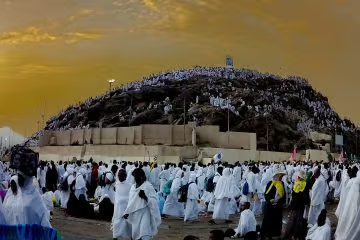
The Standing at Arafat is considered the most important ritual of Hajj.
On the Day of Arafah, millions of pilgrims gather on the plain of Arafat to spend hours in prayer, repentance, and supplication.
Many Muslims describe this moment as:
- Emotionally overwhelming
- Deeply transformative
- The closest they have ever felt to God
The Prophet Muhammad (peace be upon him) said: “Hajj is Arafah.”
3.4 Rami al-Jamarat: Rejecting Temptation
Pilgrims throw stones at pillars representing Satan in a ritual known as Rami al-Jamarat.
This commemorates Prophet Ibrahim’s rejection of temptation when Satan attempted to discourage him from obeying God.
The ritual symbolizes:
- Resisting evil
- Overcoming temptation
- Remaining steadfast in faith
3.5 Eid al-Adha & the Spirit of Sacrifice
Hajj concludes during Eid al-Adha, the Feast of Sacrifice.
Muslims around the world commemorate Prophet Ibrahim’s devotion through Qurbani — the sacrifice of an animal, with meat shared among:
- Family
- Neighbors
- Vulnerable communities
At its heart, Eid al-Adha is about:
- Generosity
- Compassion
- Feeding those in need
- Putting faith into action
For many families living through war and displacement, charitable support during Eid can provide desperately needed food, healthcare, and relief.
At SAMS, donations during Dhul Hijjah help deliver lifesaving medical care to vulnerable communities across Syria and other conflict-affected regions.
Help Families in Need This Dhul Hijjah
4. When Is Hajj 2026?
Because the Islamic calendar is lunar (about 11 days shorter than the Gregorian calendar each year), Hajj rotates through the seasons over a 33-year cycle. In 2026, Hajj is expected to fall in mid-May. Here are the projected key dates:
| Event | Estimated Date (2026) |
|---|---|
| First Day of Dhul Hijjah | May 17, 2026 (approx.) |
| Day of Arafat (9th Dhul Hijjah) | May 25, 2026 (approx.) |
| Eid al-Adha (10th Dhul Hijjah) | May 26, 2026 (approx.) |
| End of Hajj | May 31, 2026 (approx.) |
Note: Exact dates are subject to moon sighting confirmation by religious authorities. The Islamic Society of North America (ISNA) and local Islamic organizations will confirm official dates closer to the time.
The first ten days of Dhul Hijjah are among the most rewarding days of the year for charity and good deeds.
Support lifesaving medical care with SAMS this Dhul Hijjah
5. Hajj by the Numbers: A Global Gathering
Hajj is not just a religious event — it is one of the greatest logistical feats in human history. Consider the scale:
- Over 2.5 million pilgrims attend Hajj each year from more than 180 countries.
- The Grand Mosque in Mecca — Masjid al-Haram — is the largest mosque in the world, capable of holding over 900,000 worshippers at once.
- The five-day pilgrimage involves walking up to 15 kilometers per day.
- Saudi Arabia spends billions of dollars annually on infrastructure, health, and safety to support pilgrims.
Behind every number is a believer seeking mercy, forgiveness, and closeness to Allah.
6. The Spirit of Hajj: Sacrifice, Equality, and Giving
Hajj teaches that true faith is not only worship — it is mercy, sacrifice, and caring for others.
During these sacred days, millions of Muslims give to those in need through charity, food distribution, and sacrifice. The values of Hajj remind us that blessings are meant to be shared.
For families displaced by war, access to healthcare can mean the difference between life and death.
At Syrian American Medical Society, your support helps provide:
- Emergency surgeries
- Maternal healthcare
- Mental health support
- Lifesaving medicine
- Care for displaced children and families
During Hajj, millions of Muslims seek closeness to Allah through worship, sacrifice, and compassion.
For families living through war and displacement, your charity can become a source of healing, dignity, and survival.
7. Why Giving During Dhul Hijjah Matters
The first ten days of Dhul Hijjah are considered among the most sacred days in Islam. Good deeds, charity, and acts of compassion carry immense spiritual reward during this time.
For many Muslims, this is a season of:
- Sadaqah
- Zakat
- Qurbani/Udhiyah
- Supporting vulnerable families
- Seeking closeness to Allah through giving
At Syrian American Medical Society, your support during Dhul Hijjah helps deliver lifesaving medical care to families affected by war, poverty, and displacement.
8. Frequently Asked Questions About Hajj
8.1 What is the difference between Hajj and Umrah?
Hajj is the mandatory pilgrimage that takes place once a year during Dhul Hijjah and involves a specific set of rituals over five days. Umrah is a voluntary, shorter pilgrimage that can be performed at any time of year. Both involve visiting the Ka’bah in Mecca, but Umrah is not one of the Five Pillars of Islam.
8.2 Who is required to perform Hajj?
Hajj is obligatory for every adult Muslim who is physically able to undertake the journey and financially able to afford it without incurring debt or harming their family. Those who cannot perform Hajj due to illness, disability, or financial hardship are excused.
8.3 What happens on the Day of Arafat?
The Day of Arafat (9th of Dhul Hijjah) is the spiritual heart of Hajj. Pilgrims gather on the plain of Arafat, outside Mecca, from noon until sunset to pray, reflect, and seek God’s forgiveness. The Prophet Muhammad described it as Hajj itself. Even Muslims who are not on Hajj observe this day with fasting and increased worship.
8.4 How does Hajj connect to charity?
Giving is woven into the fabric of Hajj. Pilgrims are encouraged to give Sadaqah (voluntary charity) throughout the journey. Zakat al-Fitr (a form of obligatory charity) and Udhiyah (the sacrifice of Eid al-Adha) both involve distributing food and resources to the poor. The first ten days of Dhul Hijjah are considered among the best times of year to give charity.
8.5 How can I support families during Hajj and Dhul Hijjah?
The first ten days of Dhul Hijjah are among the best days of the year for giving charity. Supporting organizations like Syrian American Medical Society helps provide lifesaving medical care, food assistance, and humanitarian aid to vulnerable families in Syria and other crisis-affected regions.